Heritage LED lighting preserves the character of Turnhout’s Beguinage
Turnhout replaced deteriorated public lighting at a UNESCO World Heritage site with VALENTINO GEN2. Warm, controlled LED light preserves its historic night-time atmosphere while reducing energy use and enabling connected lighting.


Replacing deteriorated lighting under strict heritage constraints
How can a city modernise failing public lighting at a protected historic site while keeping the intervention almost invisible? At Turnhout’s Beguinage, the ageing 100W sodium luminaires and several badly deteriorated components required urgent replacement. The new solution also had to preserve the site’s daytime character, recreate its soft night-time atmosphere, limit light towards nearby homes and support the requirements of modern public lighting infrastructure.
Partner(s)
Contracting authority: City of Turnhout
Lighting operator: Fluvius
Application(s)
UNESCO World Heritage site
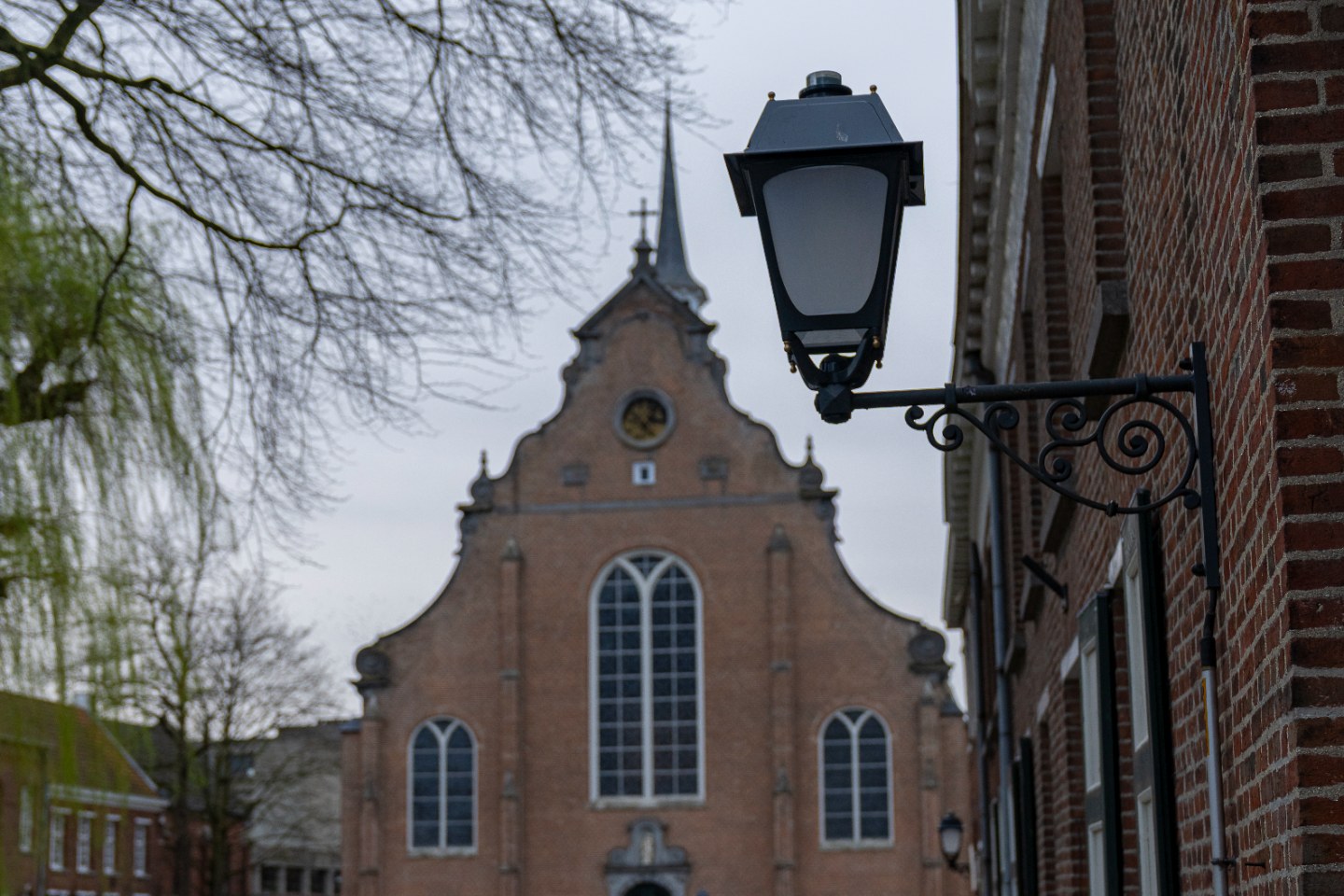
Heritage-style LED lanterns with existing columns and brackets retained.
Precise light control
DarkSky Approved luminaires. Back Light Cut blocks 80% of backward light.
Custom opal diffusers
Recreate the lanterns’ familiar soft glow.
2200K warm white
Respects the historic night-time atmosphere.
81% less installed power
19W LED replaces 100W sodium.
38 VALENTINO GEN2
Connected-ready with Zhaga-D4i.
Ageing lighting in a centuries-old setting
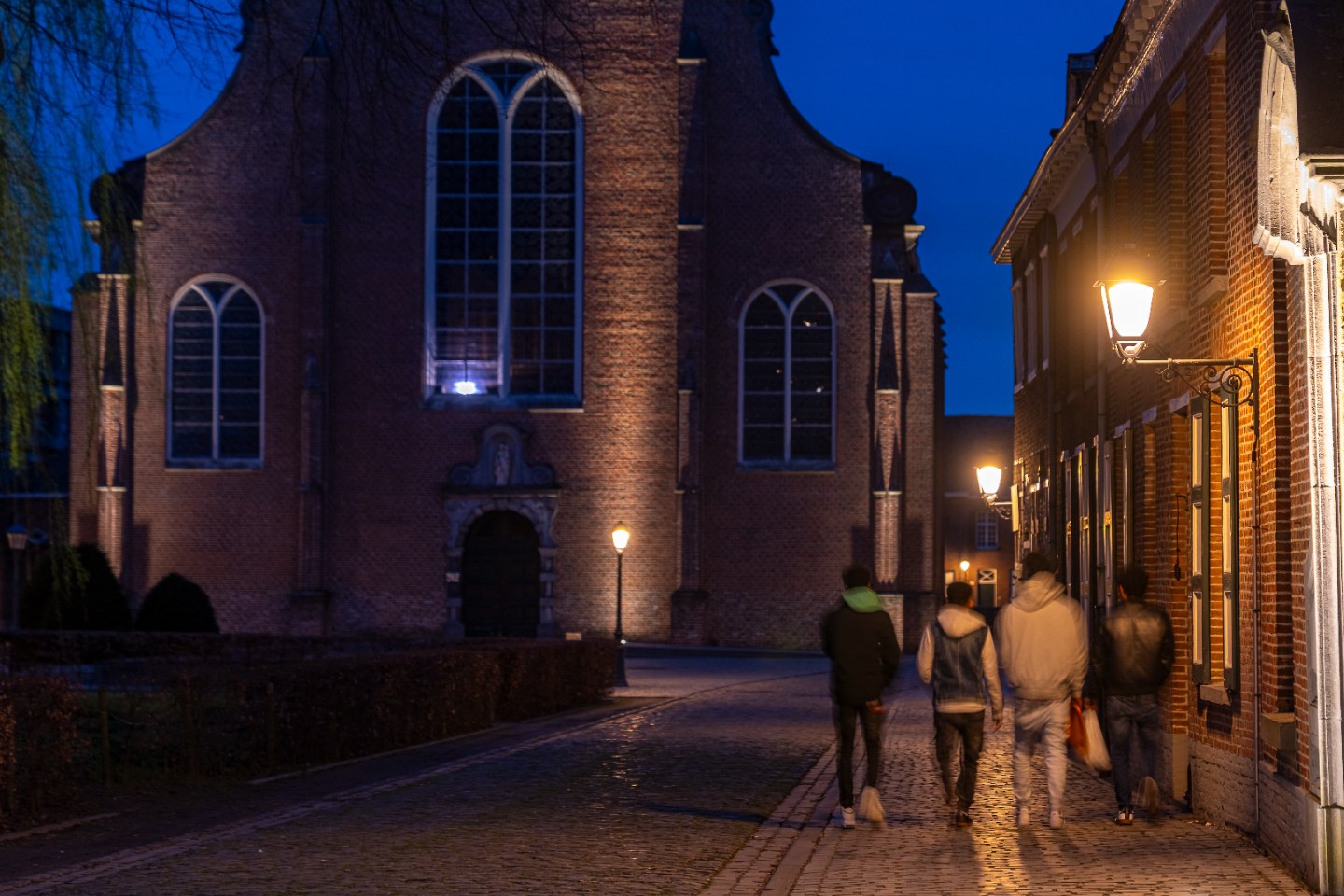
Turnhout’s Beguinage probably dates from the 13th century and developed mainly during the 15th and 17th centuries. Its historic houses and Baroque church surround green inner courtyards, creating an architectural ensemble that has been included on the UNESCO World Heritage List since 1998.
The existing lanterns formed part of that familiar setting, but their 100W sodium lamps and supporting components had reached the end of their useful life. Arms had rusted through and bases were in poor condition. Restoring every lantern individually would have required costly bespoke work. Fluvius and the City of Turnhout therefore set a clear objective: renew the lighting while preserving the Beguinage’s historic identity.
A familiar appearance by day and night
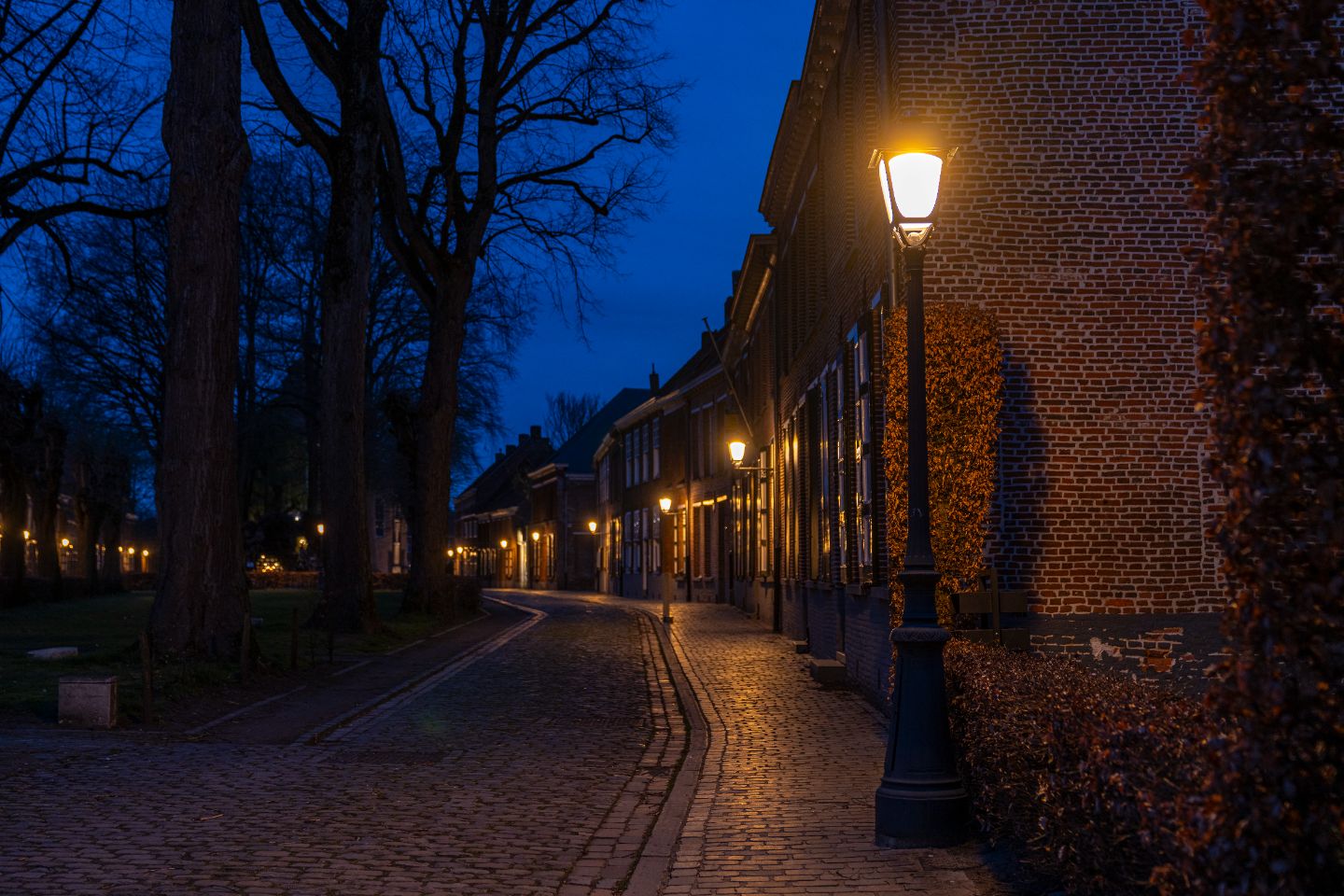
VALENTINO GEN2 provided the closest visual match to the existing lanterns and could be supplied in both post-top and suspended versions. This allowed Schréder to retain the existing cast-iron columns and wall brackets rather than introduce new structures into the protected setting.
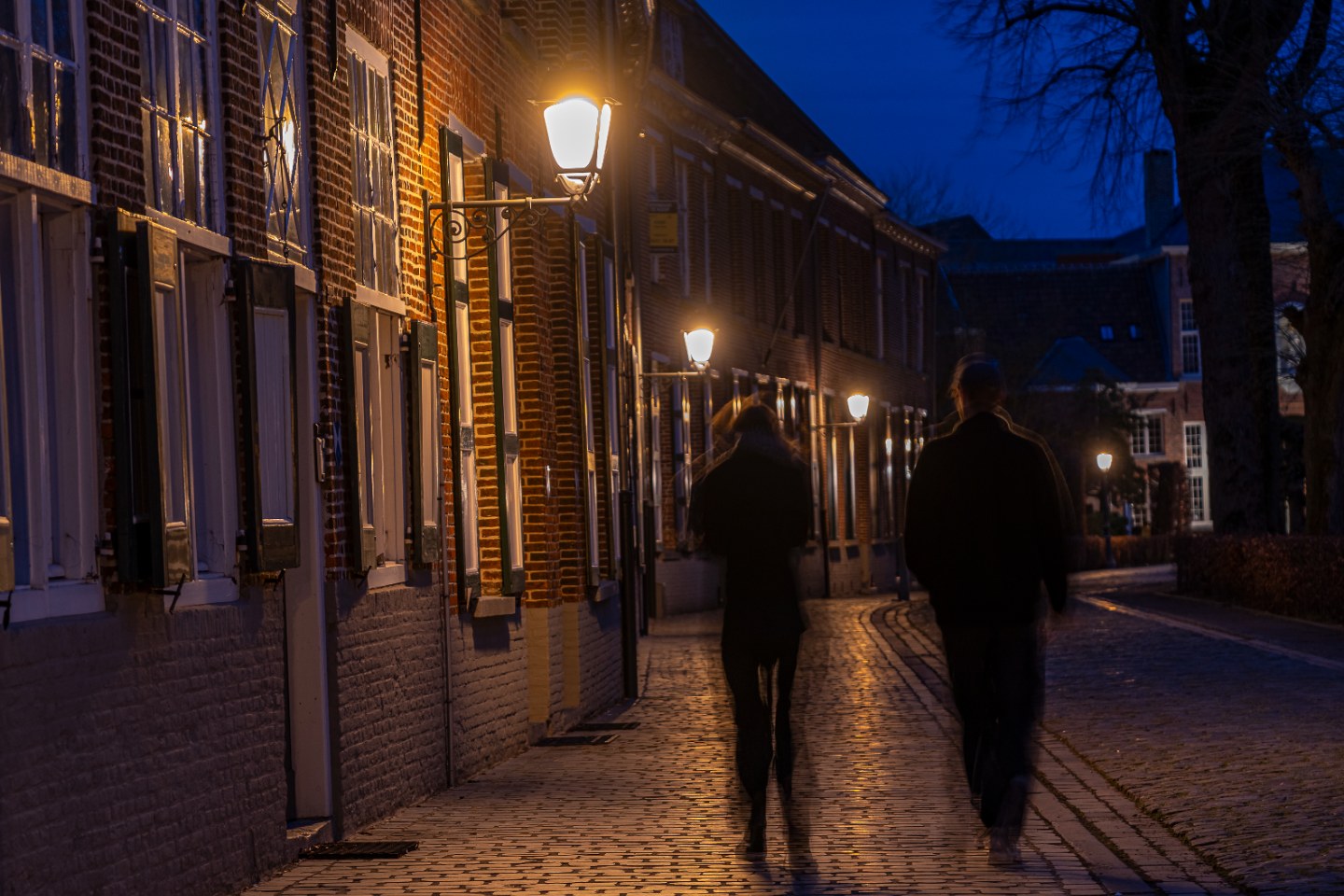
Matching the silhouette was only part of the task. The former lanterns produced a soft, diffuse glow that residents and visitors associated with the site. Because this effect was not available as a standard configuration, Schréder sourced custom opal acrylic diffusers for the limited series. Combined with a very warm 2200K colour temperature, the adapted luminaires recreate the character of the previous lighting while providing the efficiency and reliability of LED technology.
The difference from the previous luminaires is barely noticeable.

Steven Hulpiau
Area Sales Manager - Schréder Belgium
Precise light control protects nearby homes
Several luminaires are positioned close to homes. Light therefore had to be distributed evenly across the public space without shining unnecessarily onto façades and through windows. Back Light Cut blocks approximately 80% of the backward light on the housing side. The opal diffuser maintains a soft appearance, while the controlled distribution helps reduce nuisance and protect residents’ privacy.
VALENTINO GEN2 is also DarkSky approved, supporting the project’s wider objective of limiting unnecessary upward light and preserving the quality of the night-time environment.
Historic design with connected-ready technology
The visual result respects the past, but the infrastructure is prepared for future operation. Fluvius required luminaires that could be integrated into an interactive lighting network. Each luminaire was therefore fitted with a Zhaga socket, and VALENTINO GEN2 is Zhaga-D4i certified. The selected configuration also met the requirements of Synergrid’s 005 specification for public lighting in Belgium. The upgrade reduced nominal power from 100W to 19W per luminaire. This represents an 81% reduction in installed power for each replaced light point, before any additional savings that future control strategies may provide.
Close coordination protected the design intent
Work on a listed heritage site requires agreement on form, materials, atmosphere and technical performance. The City of Turnhout, Fluvius, the heritage department and Schréder Belgium coordinated the solution so that each visible intervention remained consistent with the site. The result is a public lighting installation that is easier to operate and substantially more energy efficient, while the Beguinage keeps the appearance and warm night-time atmosphere that make it distinctive.